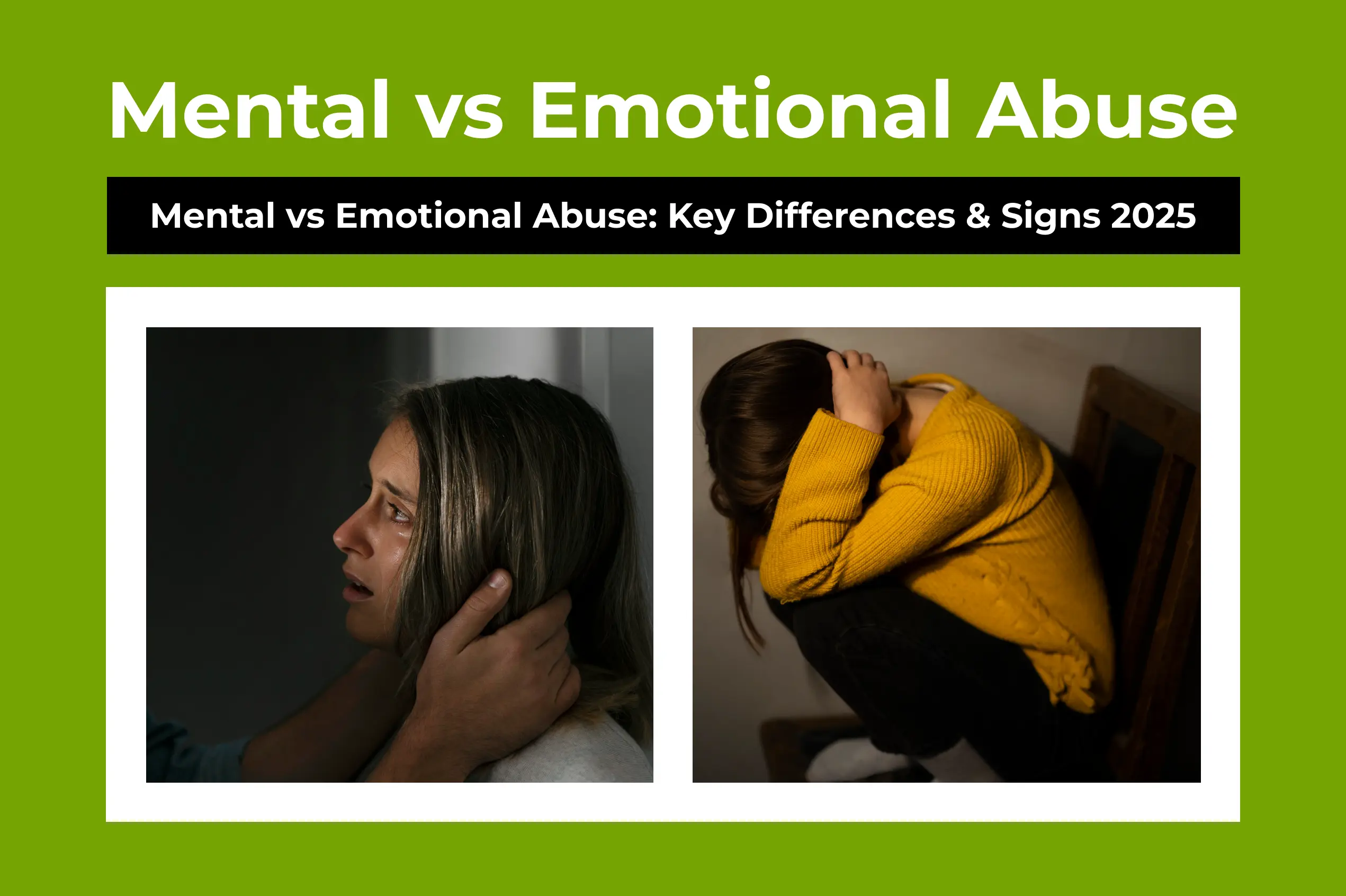
Did you know that 48% of people experience psychological abuse in relationships? Are you surprised that 1 in 3 adults has experienced emotional or mental abuse? Studies show 64% of abuse victims cannot identify what type of abuse they experienced. Research indicates mental and emotional abuse causes damage lasting 10+ years on average. Victims who understand abuse types seek help 70% faster than those who don’t. Over 85% of people regularly confuse mental abuse with emotional abuse.
Do you know the real difference between mental and emotional abuse clearly? Many people struggle to identify psychological abuse in their own relationships daily. Both types of abuse cause serious, long-lasting harm to victims’ well-being. Understanding the differences helps you recognize dangerous situations before they escalate further. Most victims don’t realize they’re being abused until years later. Confusion between abuse types delays getting crucial help and support.
Learning the differences can help you identify abuse quickly. Understanding warning signs protects you and your loved ones from harm. Early recognition of abuse patterns leads to faster intervention and recovery. Getting help early prevents 65% of long-term psychological damage from abuse. This comprehensive guide explains mental vs emotional abuse in clear, simple terms. You’ll learn specific warning signs, differences between types, and how to get help.
Understanding Mental Abuse
Mental abuse attacks how you think and see reality. This type of abuse damages your mind severely. Abusers use psychological tactics to control victims.
What is Mental Abuse?
Mental abuse makes you doubt your own reality. Abusers twist facts to confuse your thinking. They make you question your memory constantly. Gaslighting is a common mental abuse tactic. Victims lose trust in their own judgment. This abuse damages cognitive function over time.
Common Mental Abuse Tactics
Gaslighting makes you doubt what really happened. Isolation cuts you off from friends and family. Mind games keep you confused and off-balance. Intimidation through threats creates constant fear daily. Controlling information limits what you can know. Using your fears against you creates more control.
Signs You’re Experiencing Mental Abuse
| Mental Abuse Signs | Emotional Abuse Signs |
| Question your memory | Feel worthless |
| Doubt your reality | Constant self-criticism |
| Feel confused often | Walk on eggshells |
| Can’t trust judgment | Fear of emotional outbursts |
| Feel like going crazy | Feel unloved and unwanted |
| Trouble making decisions | Believe you deserve bad treatment |
Understanding Emotional Abuse
Emotional abuse targets your feelings and self-worth directly. This type of damage affects how you feel about yourself. Abusers attack your emotional well-being constantly.
What is Emotional Abuse?
Emotional abuse destroys your sense of self-worth. Abusers constantly criticize and belittle you harshly. They use words to make you feel worthless. Put-downs and insults happen regularly in relationships. Love and affection were withheld as punishment. You feel unloved and unworthy of care.
Common Emotional Abuse Tactics
Name-calling and insults hurt your self-esteem badly. Public humiliation embarrasses you in front of others. Silent treatment punishes you through emotional withdrawal. Blaming you for everything that goes wrong. Withholding love and affection as a control method. Comparing you negatively to other people constantly.
Signs You’re Experiencing Emotional Abuse
You feel worthless and unlovable most days. You walk on eggshells around the abuser. You believe their criticism of you completely. You feel responsible for their bad behavior. You have very low self-esteem now. You feel trapped with no way out.
Key Differences Between Mental and Emotional Abuse
Mental and emotional abuse differ in important ways. Understanding differences helps identify abuse types better. Both cause serious harm to victims.
Target Areas
Mental abuse targets your thinking and perception. It attacks how you process reality daily. Emotional abuse targets your feelings and self-worth. It attacks how you feel about yourself. Mental abuse confuses your mind and thoughts. Emotional abuse damages your heart and emotions.
Abuse Tactics Used
Mental abusers use gaslighting and mind games. They twist reality to confuse you badly. Emotional abusers use insults and put-downs often. They attack your character and worth constantly. Mental abuse makes you doubt your sanity. Emotional abuse makes you feel worthless inside.
Impact on Victims
Mental abuse leaves you confused and disoriented. You can’t trust your own thoughts anymore. Emotional abuse leaves you feeling worthless and broken. You can’t love yourself anymore at all. Mental abuse damages cognitive abilities over time. Emotional abuse damages the sense of self permanently.
Physical and Behavioral Warning Signs
Abuse causes physical symptoms in the body. Behavioral changes signal that abuse is happening. These signs help identify abuse situations.
Physical Symptoms of Abuse
Headaches and migraines happen more frequently now. Stomach problems and digestive issues develop suddenly. Sleep problems like insomnia become very common. Fatigue and exhaustion persist despite adequate rest. Weight changes happen without diet changes. Muscle tension and body aches appear regularly.
Behavioral Changes to Watch
Withdrawing from friends and family members completely. Losing interest in activities once enjoyed before. Difficulty concentrating on tasks at work. Increased anxiety in the abusive person’s presence always. Avoiding situations that might trigger the abuser’s anger. Becoming overly agreeable to prevent conflict situations.
Emotional and Mental Health Effects
- Depression and persistent sadness develop over time
- Anxiety and panic attacks become more frequent
- PTSD symptoms appear after prolonged exposure
Impact on Relationships and Daily Life
Abuse affects every area of the victim’s life. Relationships suffer from abuse patterns badly. Daily functioning becomes increasingly difficult over time.
Effects on Personal Relationships
Trust issues develop with everyone you meet. Difficulty forming new healthy relationships emerges slowly. Isolation from friends and family increases gradually. Fear of intimacy and closeness develops strongly. Push people away to protect yourself emotionally. Repeat unhealthy relationship patterns learned from abuse.
Impact on Work and Performance
Difficulty concentrating affects job performance negatively daily. Missing work frequently due to stress symptoms. Reduced productivity due to mental and emotional distress. Strained relationships with coworkers and supervisors develop. Career advancement opportunities get missed or lost. Financial problems from work difficulties pile up.
Daily Living Challenges
Trouble with basic decision-making about simple things. Difficulty maintaining personal hygiene and self-care routines. Neglecting household responsibilities and daily tasks completely. Social isolation leads to loneliness and despair. Loss of hobbies and interests once enjoyed. Reduced quality of life in all areas.
Getting Help and Support
Help is always available for abuse victims. Reaching out takes courage but saves lives. Many resources exist to support recovery.
Recognizing You Need Help
Admitting abuse is happening is the first step. Understanding that you deserve better treatment always. Recognizing abuse is not your fault. Knowing you cannot fix the abuser. Accepting help is necessary for healing. Realizing that staying is dangerous to health.
Immediate Safety Resources
Call the National Domestic Violence Hotline at 1-800-799-7233. Text START to 88788 for text support. Contact the local domestic violence shelter for safety. Tell a trusted friend or family member. Create a safety plan for leaving the situation. Keep important documents in a safe place.
Professional Help Options
| Resource Type | Who Can Help | How to Access |
| Therapy | Licensed therapist or counselor | Insurance or sliding scale |
| Support Groups | Other abuse survivors | Community centers or online |
| Legal Aid | Lawyers for protection orders | Local legal aid office |
| Medical Care | Doctors and nurses | Local hospital or clinic |
Healing and Recovery Process
Recovery from abuse takes time and patience. Healing is possible with the right support. The journey has ups and downs.
Early Recovery Steps
Leave the abusive situation safely when possible. Establish no contact with the abuser completely. Build a support system of trusted people. Begin therapy with a trauma-informed professional regularly. Join a support group for abuse survivors. Practice self-care and self-compassion daily.
Long-Term Healing Strategies
Continue therapy to process trauma experiences fully. Learn healthy relationship patterns and boundaries clearly. Rebuild self-esteem and self-worth gradually over time. Develop coping skills for triggers and flashbacks. Reconnect with interests and hobbies again. Create new healthy relationships with safe people.
Self-Care and Recovery
- Practice daily self-care routines consistently
- Set healthy boundaries with all people
- Learn to trust yourself again, slowly
Conclusion
Mental and emotional abuse both cause serious harm. Mental abuse targets thinking and reality perception. Emotional abuse targets feelings and damages self-worth. Both types leave lasting scars on victims. Warning signs help identify abusive situations early. Help and resources are available for victims. Recovery is possible with proper support systems. No one deserves to experience any abuse.
FAQs
What is the main difference between mental and emotional abuse?
Mental abuse targets thinking; emotional abuse targets feelings.
Can someone experience both types at once?
Yes, many victims experience both types together.
Is mental or emotional abuse worse?
Both are equally harmful and damaging to victims.
How long does recovery from abuse take?
Recovery time varies by person and abuse severity.